Floatee
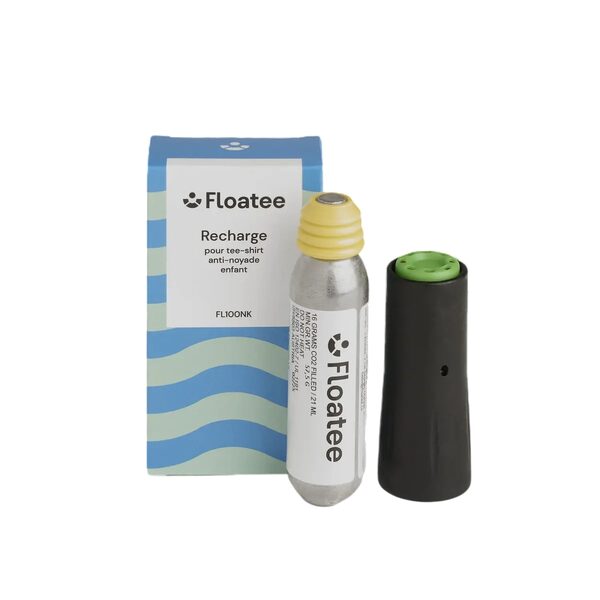
Floatee A100 Children's Lifejacket Re-arm Kit
€29.00
On the water, everyone has their own buoyancy equipment: a 50 N buoyancy aid for towed sports, a 100 N lifejacket for boating, a vest matched to each child’s weight. And a flag to signal a skier in the water.
 New
| Vest | Type | Who for |
|---|---|---|
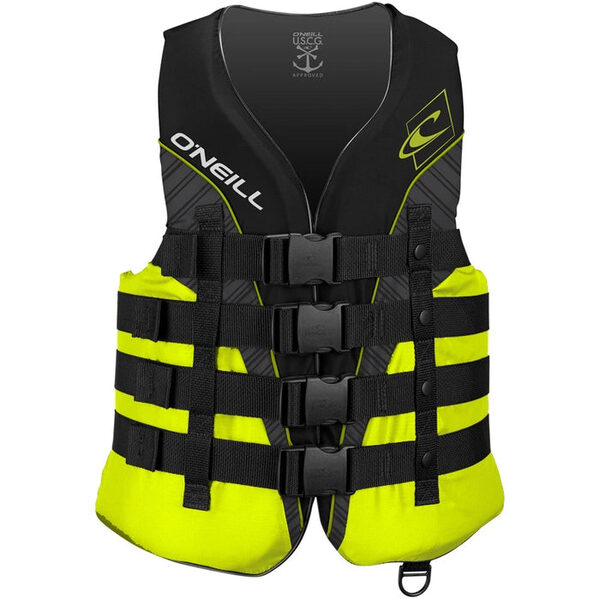
| O’Neill Superlite 50N ISO | 50 N buoyancy aid | Waterskiing, wakeboarding, adults |
| 100N lifejacket | 100 N lifejacket | Coastal and sheltered waters, 50 to 70 kg |
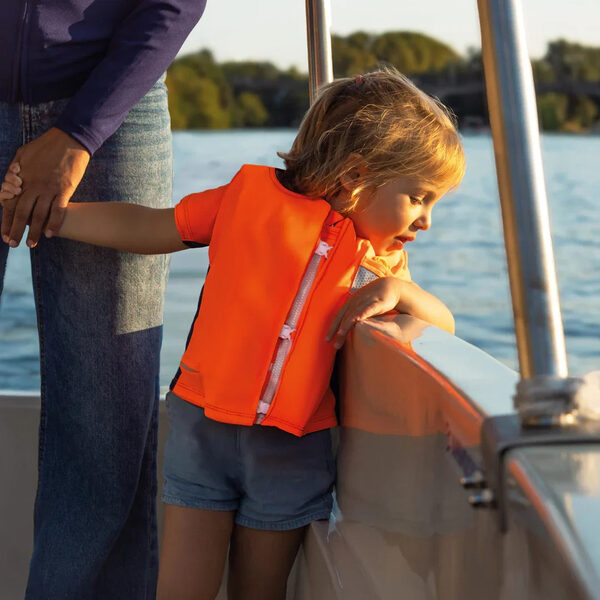
| Floatee A100 for children | 100 N automatic inflatable lifejacket | Children from 9 to 30 kg |
At sea, French regulations (Division 240) require one personal buoyancy device per person on board: 50 N up to 2 nautical miles from shelter, 100 N up to 6 miles, 150 N beyond. For towed sports, the person being towed wears at least a 50 N buoyancy aid, which leaves the arms free. On a lake, check the local regulations. Details and sizes in lifejackets.
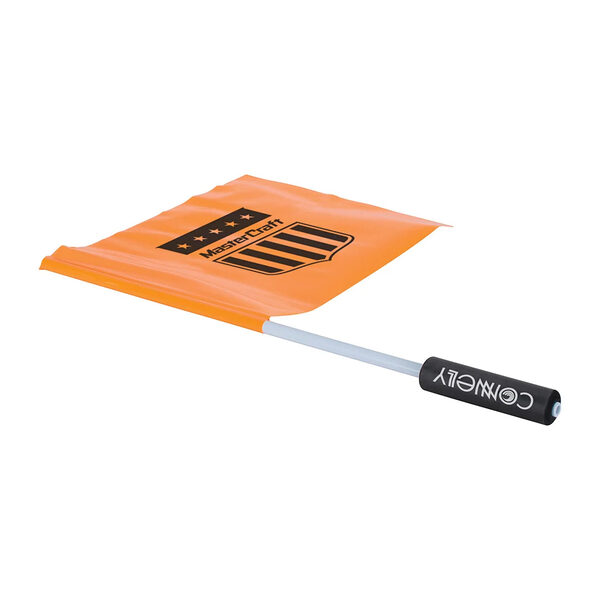
The bright orange Connelly Proline flag is raised from the boat when a skier or rider is in the water: it warns other boats. Its foam handle floats if it goes overboard.
For the boat itself (bilge pumps, battery switches, mooring), chandlery is sold at our Saint-Jorioz shop: call us on +33 4 57 57 27 27.
A buoyancy aid of at least 50 N, well fitted and low-bulk, such as the O’Neill Superlite 50N ISO: it leaves your arms free to hold the handle.
It is the buoyancy in newtons. 50 N helps a conscious person float near the shore; 100 N keeps the head out of the water when coastal boating; 150 N is for offshore.
It signals to other boats that someone is in the water behind yours, after a fall or while waiting for the start.