Connelly
Choose a slalom ski on three things: your weight, which sets the length; your level, which points you towards a wide, forgiving ski or a livelier slalom ski; and the speed of the boat. From the Big Easy to the carbon C1, every Connelly 2027 slalom ski is sold on its own or packaged with its bindings.
 New
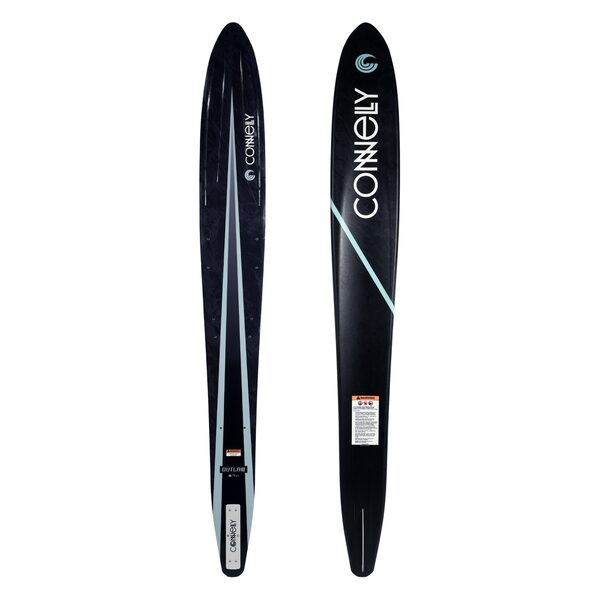
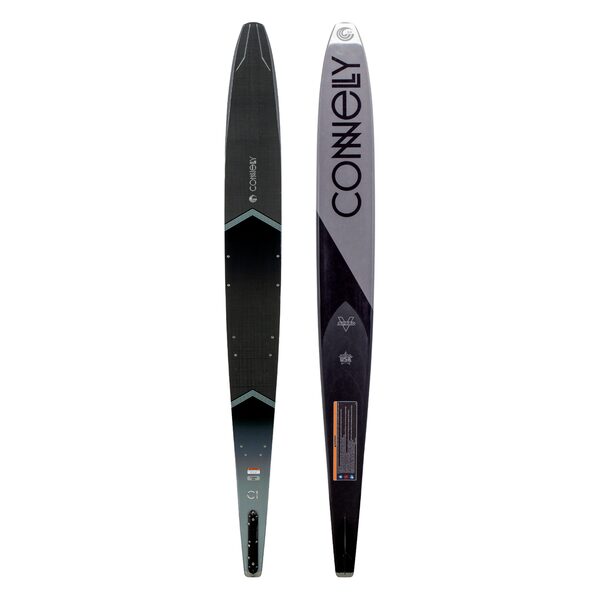
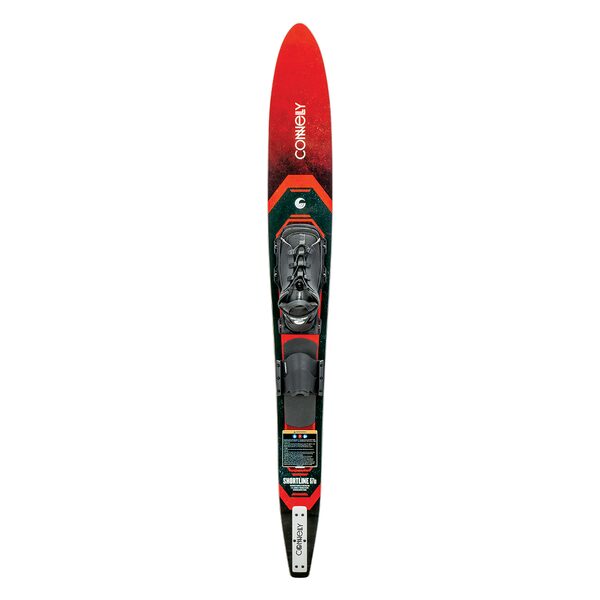 2025 model
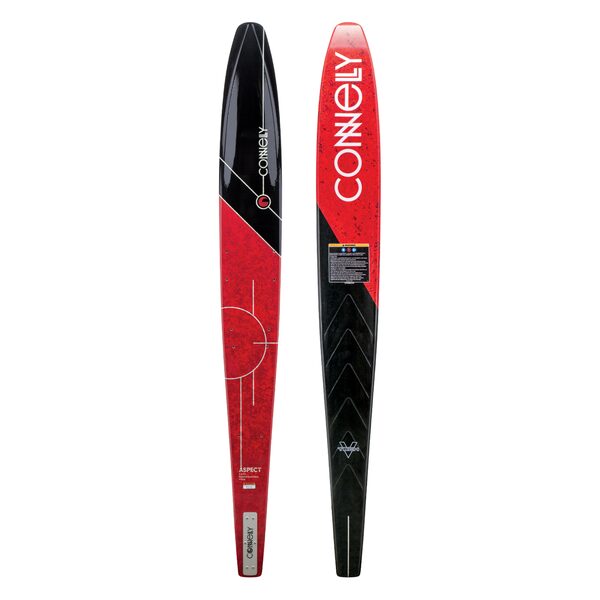 2025 model
 2025 model
| Model | Level | Ideal speed | Sizes |
|---|---|---|---|
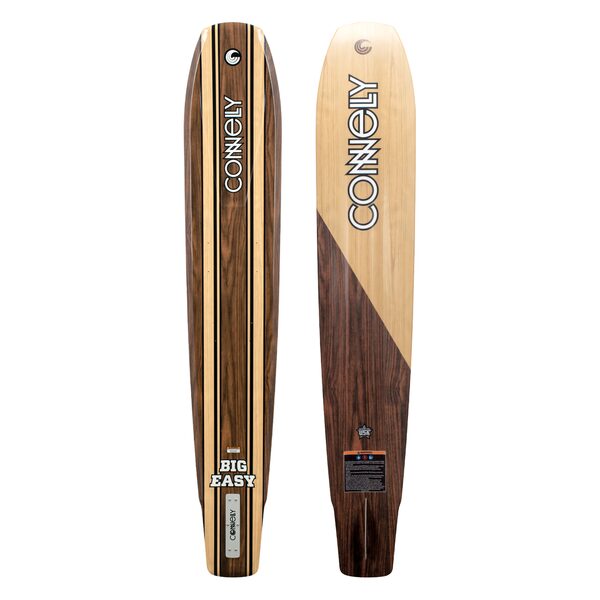
| Big Easy | Beginner, larger build | 39 to 45 km/h | 67″ |
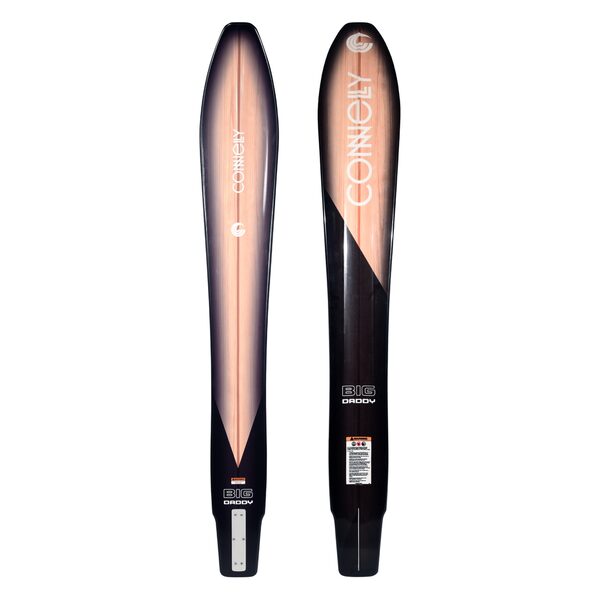
| Big Daddy | Beginner, larger build | 39 to 45 km/h | 69″ |
| Outlaw | Beginner to intermediate | 42 to 51 km/h | 65″, 67″, 69″ |
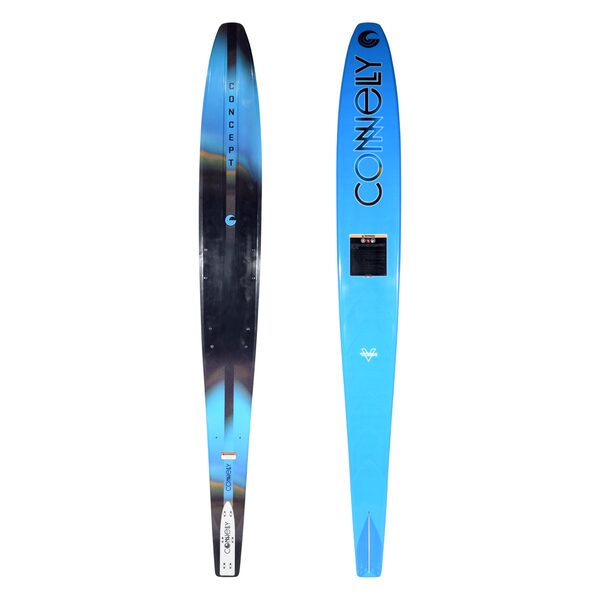
| Concept | Intermediate | 42 to 51 km/h | 65″, 67″, 69″ |
| Rocket | Advanced | 48 to 55 km/h | 65″, 67″, 69″ |
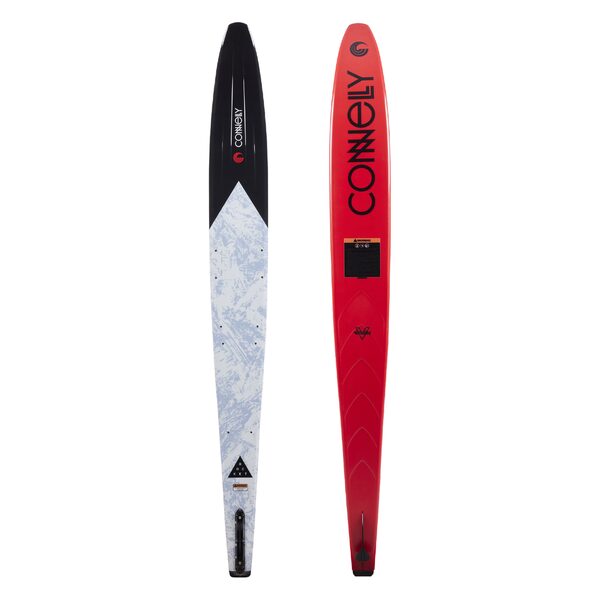
| C1 | Expert, slalom course | 51 to 58 km/h | 63″ to 68″ |
Ski only, supplied with its fin.
| Rider weight | Outlaw | Concept | Rocket |
|---|---|---|---|
| up to 73 kg | 65″ (165 cm) | 65″ (165 cm) | 65″ (165 cm) |
| 73 to 82 kg | 65″ | 65″ | 67″ (170 cm) |
| 82 to 91 kg | 67″ (170 cm) | 67″ (170 cm) | 67″ |
| 91 to 95 kg | 67″ | 67″ | 69″ (175 cm) |
| 95 to 100 kg | 69″ (175 cm) | 67″ | 69″ |
| over 100 kg | 69″ | 69″ (175 cm) | 69″ |
The wide Big Easy (67″, 635 sq in, about 41 dm²) and Big Daddy (69″, 550 sq in, about 35 dm²) are made for skiers over 100 kg and for anyone who wants an easy start at lower speed. The C1 comes in five lengths: 63″ up to 54 kg, 65″ from 54 to 68 kg, 66″ from 64 to 77 kg, 67″ from 73 to 86 kg, 68″ from 82 kg. Between two sizes, take the longer one if you are a beginner or ski slowly.
Big Easy and Big Daddy: a large lifting surface, a “recreational” flex and a system that keeps the tip straight on the start. These are the most forgiving slalom skis. Outlaw: wide tip and tail for deep-water starts, a narrower waist under the bindings to stay lively; this is the ski for moving from two skis to slalom. Concept: the same speed range as the Outlaw, with a wider base, a wider concave tunnel and a six-step V-Tech base that cuts drag, for progressing in slalom. Rocket: performance flex, Viper 2.0 fin and Versatail blocks supplied to fine-tune how it rides. C1: 90% carbon laminate, VersaFin fin, the ski for running the slalom course.
Every slalom ski is sold without bindings, or as a package with its bindings at a fixed price, usually well below buying them separately. For example, the Outlaw with Swerve binding and Swerve rear toe plate costs noticeably less as a package than bought piece by piece. Choose the package directly on the ski’s page; all packages are also gathered in the water ski packages.
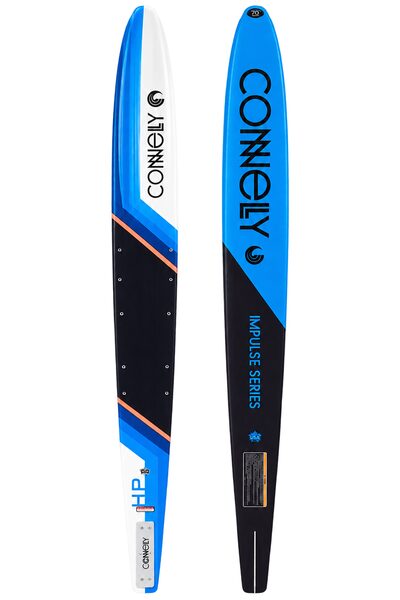
A few slalom skis from previous collections are still available, marked “2025 model”: Shortline, HP, Aspect. They are new skis from the previous year’s range.
In France, the person being towed wears a vest or buoyancy aid of at least 50 N, and the driver has a second person on board to watch them. Skiing takes place in the zones and channels set aside for it; on a lake, a prefectural order sets the zones and times. See our lifejackets and buoyancy aids.
Performance skis use carbon for precision and explosive acceleration; recreational skis use fibreglass for a forgiving, less demanding ride. The blend of the two tunes the flex of each ski to its use.

Carbon is very light and very responsive. 10% fibreglass damps vibration: chop is smoothed out, and the ski lasts noticeably longer.

As much carbon as fibreglass: a fast, responsive ski with a smooth, consistent flex that does not chatter on less than perfect water.

A technique known since the 1960s; advances in fabrics and how they are layered now give light skis with a consistent flex that damp vibration well.

Six V-shaped steps break up the flow of water under the ski, from the front binding to the fin. Less water clings to the ski as it accelerates: it turns more easily and drags less.

V-Tech adapted for fast skis: the curved V steps slow the water in the middle of the tunnel more than along the edges. Drag drops without losing edge grip.

A slight rib under the tip keeps the ski running straight while the boat pulls you out of the water on a deep-water start.

A concave channel along the whole length, which sets the ski down in the water and gives it grip. It leaves a flatter area between the tunnel and the edge bevel: the ski gains stability without losing grip.

It leaves only a very narrow flat strip before the bevel: the ski wants to get on edge by itself. For advanced skiers and buoy chasers in full control of their ski.

A tunnel within the tunnel: the ski sits deeper in the water and bites harder when it is on edge.
Versatail is Connelly’s interchangeable tail system (patent pending). Each block changes the geometry of the back of the ski and the way water leaves it: one more adjustment, beyond the fin and binding placement.
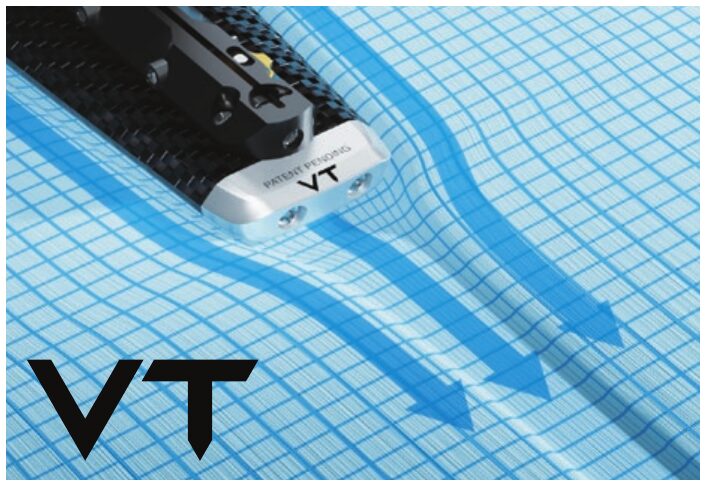
A balanced tail depth through the turn and across the wake.
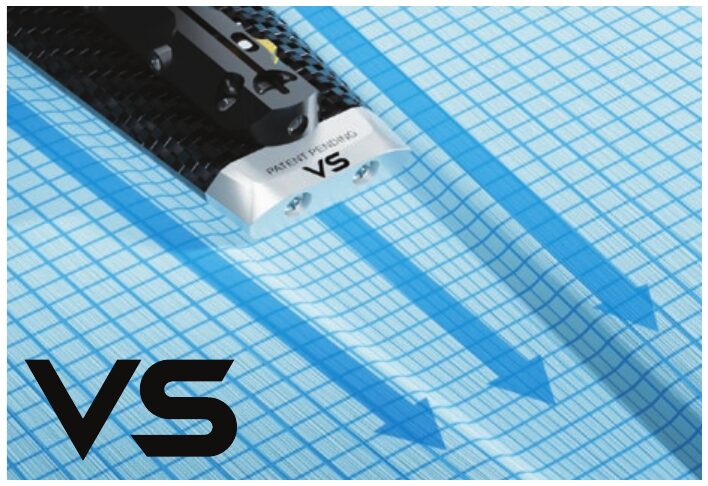
A square tail that lifts the ski more and releases water cleanly, for speed.
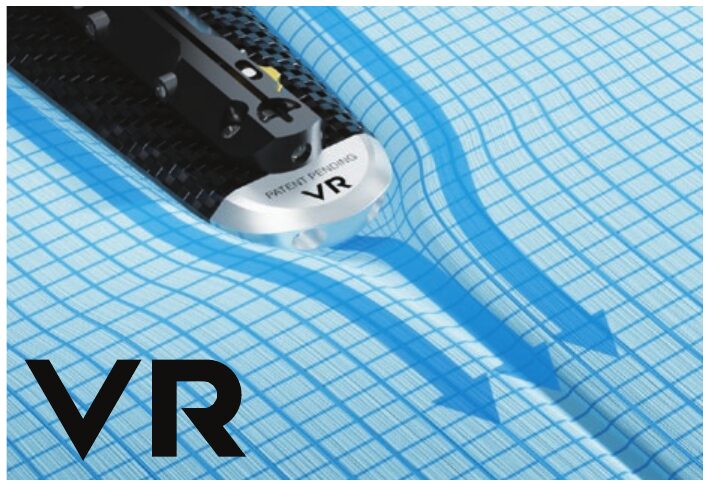
The ski stays deeper in the water as it enters the turn: more control at high speed, shorter turns, less tail slide.
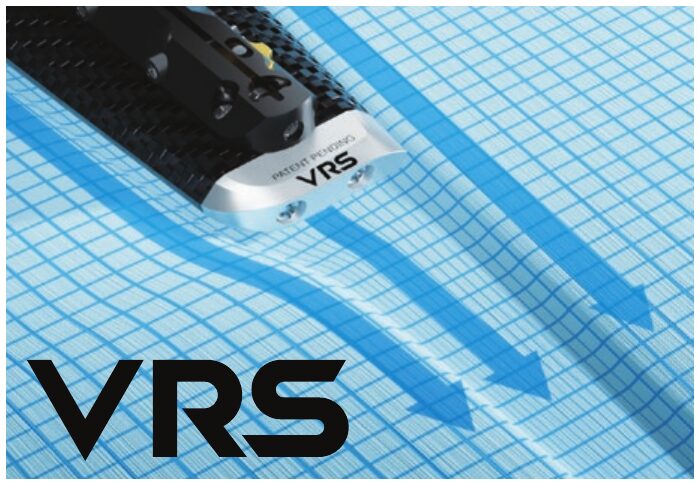
The ski sits deeper in left-hand turns and puts more weight on the tip in right-hand turns: a way to balance your strong side and your weak side, to suit your strength and style.
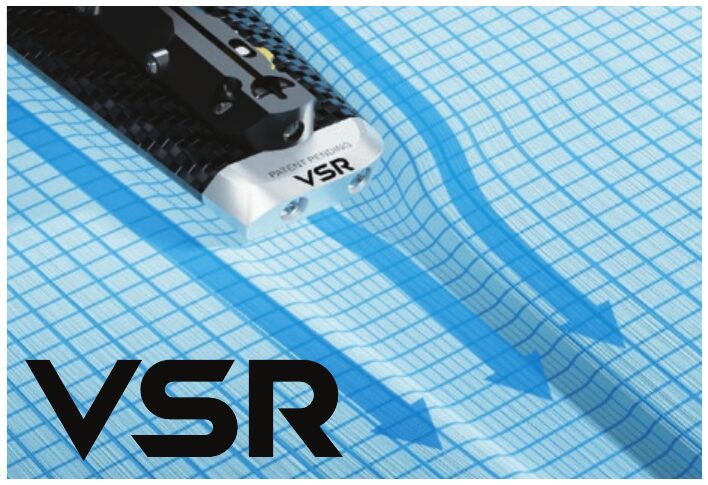
The same principle as the VRS, mirrored: an asymmetric tail to balance the ski between turns on your strong side and those on your weak side.
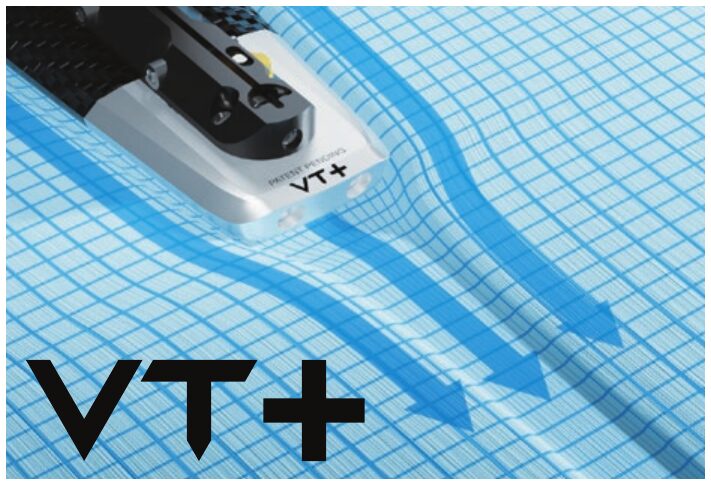
An extension that takes the ski from 63″ to 65″.
It is measured from the tail of the ski to the heel of the front binding.
Diagrams and explanations: Connelly 2027 catalogue.
A 65″ (165 cm) Outlaw or Concept, both rated up to 82 kg; a 67″ (170 cm) Rocket, rated from 73 to 91 kg. In the C1, the 67″ covers 73 to 86 kg.
The Outlaw for most skiers: it gets up easily in deep water and stays forgiving. Over 100 kg, or for starts at lower speed, the Big Easy (67″) or the Big Daddy (69″).
They share the same sizes and the same ideal speed (42 to 51 km/h). The Concept has a wider base, a wider concave tunnel, a six-step V-Tech base and a performance flex: it is more precise in slalom. The Outlaw has a recreational flex and is more forgiving.
No: the ski on its own is supplied without bindings, fitted with its fin. On each ski’s page, the package option adds the bindings at a fixed price; you can also choose them separately.
That is the length of the ski in inches: 65″ is 165 cm, 67″ is 170 cm, 69″ is 175 cm.