 2025 model
Connelly
Everything you need to get on the water, added to your basket in one go. Untick what you already have.
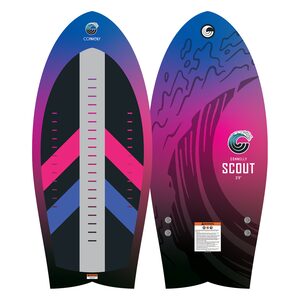 Connelly Scout Wakesurf BoardSize: 3'9"€609.00
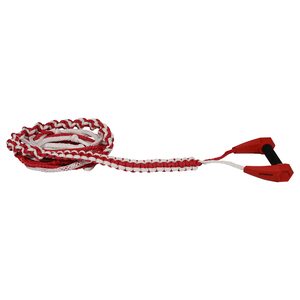 Connelly TORQ Surf Rope
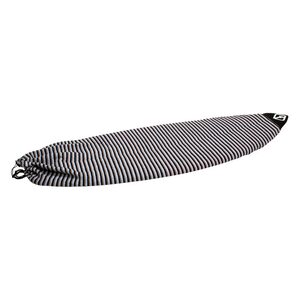 Connelly Wakesurf Board Sock
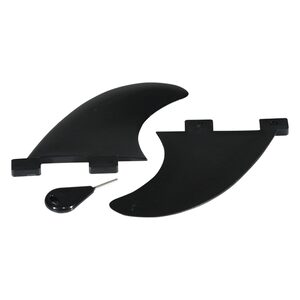 Connelly 3.6″ FCS II Wakesurf Fins (Pair)€49.90
The Scout is a real surf board for young riders pushing their limits: a classic fish shape, epoxy construction, lively and responsive.
For children and teenagers who are already confident and want to move from a learning board to a surf-style board.
Its fish shape holds its edge well through a turn, and its refined tail makes it easier to switch from one rail to the other. Twin 3.6″ FCS fins.
Wakesurfing is only done behind an inboard boat, whose propeller sits under the hull: never behind an outboard or a sterndrive. Ballast and a wake shaper build the long wave you need to surf, at around 16 to 19 km/h.
A range of rail shapes, outlines and fins, for different styles and abilities. There is more than one way to surf a wave: try them all.
For getting on the water and finding your flow. A thicker profile and softer rails than a hybrid.
A thin profile, fairly sharp rails and a deep surf-style fin: a lively, responsive board that can also draw big carves.
The board relies more on its rails than its fins. Loose and skate-inspired: spins, ollies and shove-its are far easier than on a thick board with big fins.

The two points act as two tails: water runs along the rail to the rearmost point, for stability, and the gap between the points keeps the board manoeuvrable.

Wide, with plenty of surface area: a stable platform, slightly slower rail-to-rail transitions. Perfect for beginners.

The all-round shape: water follows the curve of the tail for more hold, and the large surface area keeps the board high on the water for manoeuvrability.

A surface area close to a round tail, which keeps the board high and manoeuvrable; the angle at the back of the rail releases water for a livelier feel.

A longer rail at the tail, with less volume; together with the channels in the base, water releases at these points: a lively, loose board.

Widens the carves of boards with a wide tail: the width gives drive and stability, balanced by the mobility of the swallow.

Technically a break in the rail, often near the fins: water releases at this notch rather than at the tail, for a looser feel.

With no centre fin, less resistance in the middle of the board: more speed, a board that releases easily in a slash and still holds in a bottom turn.

The speed set-up: two front fins and two smaller ones at the back, all with flat foils. Water flows straight through without resistance, and the curved face gives lift and hold in the wave.

Probably the most common set-up: the large centre fin holds the line, the two flat-foiled side fins give speed and hold in the wave.

A through-bolted set-up, reliable, simple and customisable: three fins for stability, without the centre fin for a twin feel, without the side fins for a skim set-up.

For playing fast and loose: the board releases very easily, and spins and ollies come without effort.
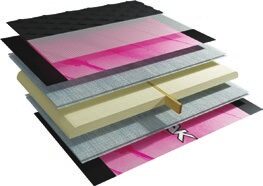
The construction surf shapers have always used: a very light, buoyant and responsive board that allows almost any shape. From top to bottom: EVA pad or Ghost grip, top graphics, 2 layers of fibreglass, EPS core, full-length wood stringer, 2 layers of fibreglass, base graphics.
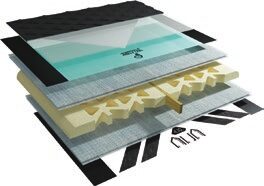
A core shaping technique that reduces its mass: the fibres react faster and more naturally. From top to bottom: EVA pad or Ghost grip, top graphics, 2 layers of fibreglass, Skelecore EPS core, full-length wood stringer, 2 layers of fibreglass, base graphics.
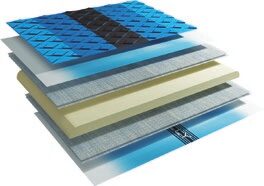
Moulded under pressure, the board is thin, stiff and strong; beginners and skim riders benefit from its sharp rail. From top to bottom: EVA pad, top graphics, 2 layers of fibreglass, EPS or PU core, 2 layers of fibreglass, base graphics.
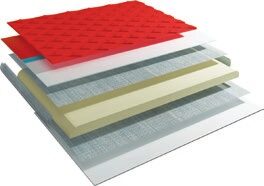
The strength of a compression-moulded board and the shaping freedom of an epoxy board: strong, light and made to send it. From top to bottom: EVA pad, Thermo Shell top, 1 layer of fibreglass, EPS core, 1 layer of fibreglass, Thermo Shell base.
Diagrams and explanations: Connelly 2027 catalogue.
| Sizes | Fins | Style |
|---|---|---|
| 3′9″ (114 cm) | Twin FCS 3.6″ | surf, children |
2025 model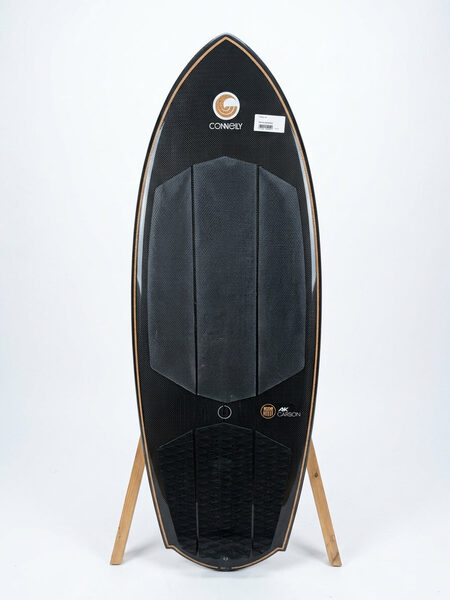 New